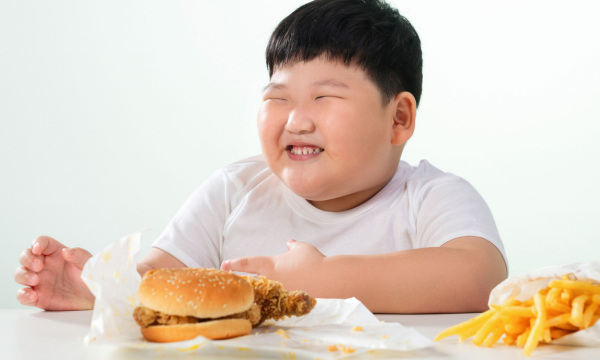
Next to their lean counterparts, chubby kids get all the attention. From their round and pinchable cheeks to the way their clothes fit snuggly on their pleasantly plump little bodies, chubby children are regarded as “cute,” “cuddly,” and even “healthy.”
Doctors like Maria Imelda Belen Vitug-Sales, MD, Pediatric Gastroenterologist of Makati Medical Center (MakatiMed), can only hope they outgrow their baby fat.
Childhood obesity is regarded as a critical health issue in the Philippines. According to the Philippine Expanded National Nutrition Survey of the DOST-FNRI, in 2019, 1 in every 10 children aged 5 to 10 years old and 10 to 19 years old is overweight. Without any adult intervention to help kids achieve their ideal weight, experts foresee that more than 30 percent of adolescents will either be overweight or obese by 2030.
What exactly is “overweight”?
According to the World Health Organization (WHO), overweight and obese are an abnormal or excess accumulation of fat that poses a health risk. These are determined through a person’s Body Mass Index, or their weight in kilograms divided by the square of their height in meters.
At a time when a quick run to the nearest fast-food joint provides an instant meal for a busy family, unhealthy food choices and eating habits rank as the number one reason for childhood obesity. “We live in a society that has a lot of fast food, and it is not healthy,” says Dr. Vitug-Sales. “Most of them are oily, have lots of fat, very sweet, and/or with very little nutritional content.”
The lack of physical activity, no thanks to hours spent staring at the TV or a gadget, leads kids to pack on the pounds too. Genetics is also a factor: Obese parents tend to have obese kids.
“Chubby” may be cute, but it is also dangerous. Obesity is a risk factor for diseases such as type 2 diabetes, non-alcoholic fatty liver disease, high cholesterol, high blood pressure, sleep apnea, and rheumatism.
Role models of healthy living
Ultimately, beating childhood obesity rests on the parents. By serving as role models to their kids, Mom and Dad can influence their young sons and daughters to embrace healthy eating and lifestyle habits.
“You do not necessarily have to put them on a diet. But you want to establish a healthy lifestyle. [Give them] good options for food,” says Dr. Vitug-Sales. By that, she means prioritizing different colored fruits and vegetables, lean protein, and complex carbohydrates. Teach your child about portion control or eating just enough for their needs.
Set a good example as well by logging off social media and getting up from your seat to engage in physical activity. Invite your little ones to go for a walk or run, play games at the park, or get into sports like swimming or basketball.
“You have to sustain it. You cannot just do [the physical activity] once a week,” shares the MakatiMed doctor. “The recommendation for pediatrics is one hour or 60 minutes [of active exercise] every day.”
It is a tough world out there, and parents will do anything and everything to protect their kids from its myriad challenges. Start by teaching them to appreciate the taste and advantages of healthy eating and the fun and physical and mental gains of an active lifestyle. By showing them how it is done and the good they can get out of it, you achieve every parent’s goal: to help your children grow into strong, confident, and healthy adults.
Article based on the DZMM Radyo Patrol 630 guesting of Maria Imelda Belen Vitug-Sales, MD, last January 23, 2026.
For the complete list of Makati Medical Center’s Pediatricians, click here. You may also reach us via MakatiMed On-Call at (+632) 8888 8999 or at mmc@makatimed.net.ph.
Follow our social media pages for more health-related content and for the latest updates: https://www.makatimed.net.ph/social-media-pages/