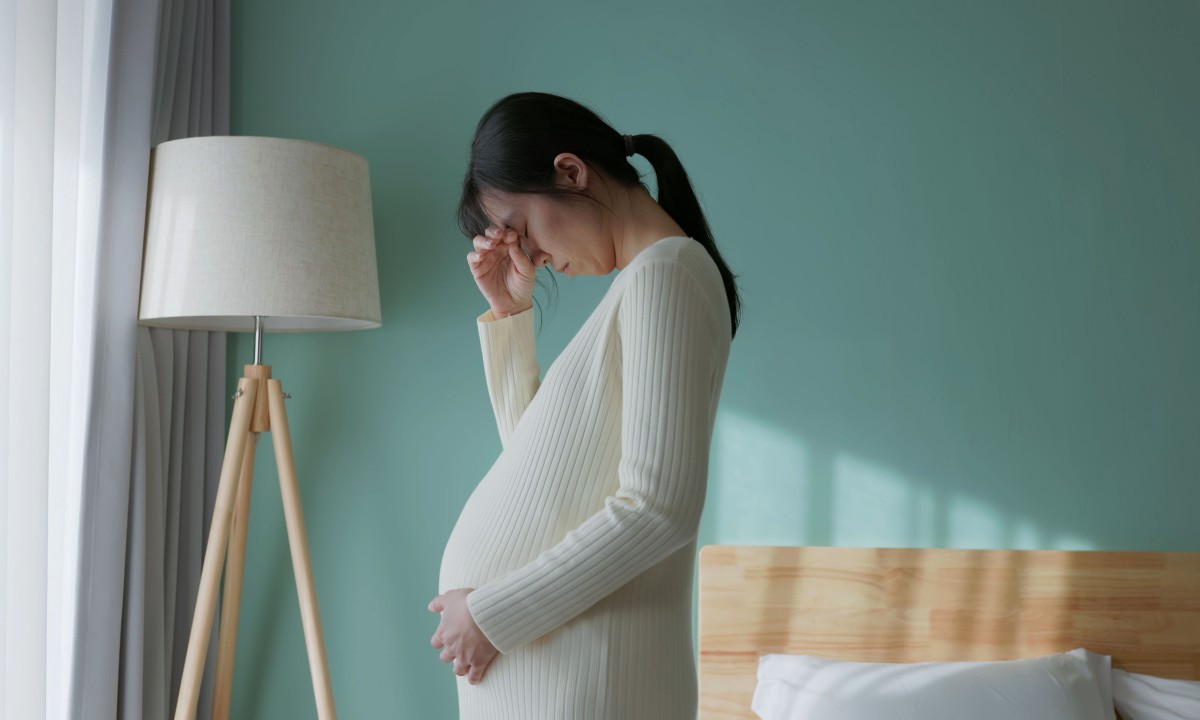
As the parent designed by nature to carry a baby to full term in her womb, a mother has the great responsibility of taking good care of herself. Her overall health, after all, has a direct effect on the health of her unborn child.
If she has the Zika virus, HIV/AIDS, or Hepatitis B or C, she will likely pass it on to her baby during pregnancy or childbirth. Cigarettes, alcohol, and drug consumption put a baby at risk for developing birth defects and developmental delays. A mother with unmanaged diabetes may give birth to a larger-than-usual baby with low blood sugar. And a woman who catches German measles in the first 20 weeks of her pregnancy not only spreads the infection to her unborn baby; the chances are high that her infant will come into this world plagued with visual, hearing, and heart problems.
But babies can unknowingly make their moms sick too.
Weight gain is a given during pregnancy. In fact, packing on anywhere from 25 to 35 pounds is to be expected. But when a pregnant woman’s added weight appears as fluid retention on her face, hands, abdomen, and feet, she is most likely replicating the same condition as her unborn child—a condition called Mirror Syndrome.
Mirror syndrome
Serious but rare, Miror Syndrome is defined as the excessive fluid buildup of both a pregnant woman and her unborn child. The condition usually presents itself in the fourth or fifth month of pregnancy.
“The problem starts with the baby,” shares Makati Medical Center (MakatiMed) Perinatologist Marie Catheleen Perez-Santiago, MD. “When a baby in the womb has a severe heart condition or is very anemic, it develops fluid retention in its heart and lungs. A few days later, the baby’s mother will show similar symptoms: swelling on her face, hands, tummy, and feet, as well as fluid in her lungs, shortness of breath, and high blood pressure. In mirror syndrome, what a baby experiences in its mother’s womb are what its mother experiences too.”
Also known as Ballantyne syndrome, after the Scottish physician Dr. John Ballantyne, who first identified the condition in 1892, mirror syndrome is so rare, Dr. Perez-Santiago knows of only 20 cases documented in the last 10 years in the Philippines. “In 1,000 cases, only one or two will be diagnosed with the condition,” she reveals.
This leaves specialists with a lot of unanswered questions. “We don not have an explanation. It just happens,” says the MakatiMed doctor of how Mirror Syndrome starts and why mothers mirror their baby’s condition. She can only surmise
that genetics or an infection may have triggered hydrops fetalis, or the abnormal accumulation of fluid in a baby’s heart, lungs, abdomen, or skin.
Diagnosis
A simple ultrasound of the baby is the first step to diagnosing mirror syndrome. “You’ll see the baby has fluid buildup in the lungs and stomach and its skin is thick,” says Dr. Perez-Santiago. An ultrasound on the baby’s mother to check for any water buildup in her heart, lungs, and abdominal cavity confirms the diagnosis.
Mirror syndrome, whose symptoms include high blood pressure, is not to be mistaken for preeclampsia. “They are similar but not the same,” explains Dr. Perez-Santiago. “Preeclampsia, or when a pregnant woman’s blood pressure is consistently at or over 140/90 mm Hg, usually happens in the latter half of pregnancy.”
Unlike mirror syndrome, preeclampsia is not caused by the baby. However, it contributes to a baby’s oxygen and nutrition deprivation, due to restricted blood flow to the placenta. Doctors usually recommend a preterm birth, to prevent potential developmental delays and health complications like epilepsy, cerebral palsy, and loss of vision.
Preterm birth is also how doctors manage severe cases of mirror syndrome, when both mom’s and baby’s health are compromised. “To relieve the mother of high blood pressure, possible heart failure, and kidney problems due to fluid retention, we recommend an early delivery,” she says. “Once she delivers, she improves within a matter of days, and her body’s functions return to normal in weeks.”
As for her baby, the premature newborn is admitted into the hospital’s neonatal intensive care unit and monitored extensively by a team of specialists.
The outlook for a mother and baby with mirror syndrome depends on how soon the condition is diagnosed and attended to. Thus, scheduled checkups for baby and mom are key.
Pregnant women are advised to see their OB-GYN every month till the 28th week, then every two weeks from weeks 28 to 36, followed by weekly visits from week 36 till their due date. Those who note rapid weight gain accompanied by difficulty breathing and hypertension should not delay a visit.
The arrival of a newborn is always a cause for celebration, most especially when an infant is born healthy and mom experiences a pleasant delivery on her due date.
“Always have your regular checkups so everyone will be happy once a baby is born,” reminds Dr. Perez-Santiago.
Article based on “Mirror Syndrome: How Baby’s Health Can Affect the Mother” guesting of Marie Catheleen Perez-Santiago, MD, last December 14, 2025.
Follow our social media pages for more health-related content and for the latest updates: https://www.makatimed.net.ph/social-media-pages/