Imagine a non-cancerous, pearl-like cyst measuring a few millimeters in diameter. Harmless, right? Not when it develops in your middle ear. Left untreated, it can throw your whole body out of whack—and can even lead to serious, irreversible complications.
That, in a nutshell, is cholesteatoma, defined as a benign or abnormal growth of skin cells behind your eardrum.
“Despite what it sounds like, cholesteatoma is neither cancerous nor is it made up of cholesterol, but of skin cells that are not supposed to grow in our middle ear,” explains Gerard Lapiña, MD, Ear-Nose-Throat (ENT) Specialist at Makati Medical Center (MakatiMed). Rarely congenital (only 3 out of 100,000 babies are born with it, says Dr. Lapiña), cholesteatoma can be traced to the Eustachian tube, a narrow channel that connects your middle ear and facial muscles to your nasal cavity.
“The Eustachian tube is responsible for the free flow of air into the middle ear. When there is a problem, the eardrum retracts, creating a cyst of old skin cells and waste material that grows,” says the MakatiMed ENT doctor.
Chronic ear infections, ear pain, hearing loss, dizziness, balance problems, and a constant ringing in the ear that comes from inside the body rather than an external source are classic symptoms of cholesteatoma. Still, the most unmistakable sign is a foul-smelling, pus-like discharge from the ear. “About two-thirds of the patients who come to us complain of discharge or ‘luga’ in Filipino,” adds Dr. Lapiña.
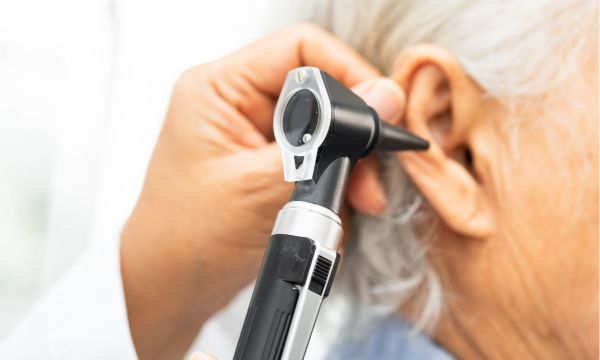
Using a handheld device called an otoscope, your ENT doctor (or otolaryngologist) will look into your ear to check for any damages to your eardrum as well as the presence of old skin cells. If necessary, your specialist can also order a hearing test to gauge the extent of your deafness. A CT scan can also be requested to rule out other conditions or see if the cholesteatoma has already eroded into your ossicles or ear bones.
Given our ears’ proximity to vital organs in the head, cholesteatoma can erode into the nerves of our face, resulting in facial paralysis. It can lead to meningitis or the inflammation of the meninges, the membranes that protect the brain and spinal cord. And while remote, developing a potentially fatal brain abscess is possible.
The surgical removal of the cyst is the standard of care for cholesteatoma. A mastoidectomy is performed when the cholesteatoma has encroached into the mastoid (or the bone behind the ear). To repair a damaged eardrum, surgeons perform a tympanoplasty. Surgery lasts anywhere from two (2) to eight (8) hours, depending on the size of the cyst, the vital structures affected, and the type of procedures involved.
“Usually, I recommend my patients get two (2) weeks’ rest post-surgery before going back to school or work, and for the ear to completely dry. Especially if they underwent a mastoidectomy. Sometimes, it can take two (2) to six (6) months for it to completely dry,” notes Dr. Lapiña. Do your part to keep your ear from getting wet during recovery: place a cotton ball or ear plug when you bathe to avoid bacterial infection.
Dizziness and a metallic taste in the mouth are two of the known side effects following surgery. Both resolve themselves within days.
Unfortunately, surgery does not mean cholesteatoma would not come back; recurrence rates range from five (5) percent to 71 percent. “But for as long as we completely remove the skin cells, the less chance there is of recurrence,” says Dr. Lapiña.
New and improved approaches in surgery are also being performed, “so if patients are amenable to having their cholesteatoma treated earlier, the less invasive it can be,” he adds.
Vigilance and swift action are the way to go for those with a predisposition for cholesteatoma. See your doctor immediately when you feel an ear infection coming, and don’t wait for your symptoms to progress.
“Do not be afraid to ask or consult a specialist if you feel anything,” reminds Dr. Lapiña. “The sooner you know you have an ear problem, the earlier you can solve it.”
Article based on the Doctors on TV guesting of Gerard Lapiña, MD last June 9, 2024.
For the complete list of Makati Medical Center’s ENT Specialists/Otolaryngologists, click here. You may also reach us via MakatiMed On-Call at (+632) 8888 8999 or at [email protected].
Follow our social media pages for more health-related content and for the latest updates: https://www.makatimed.net.ph/social-media-pages/