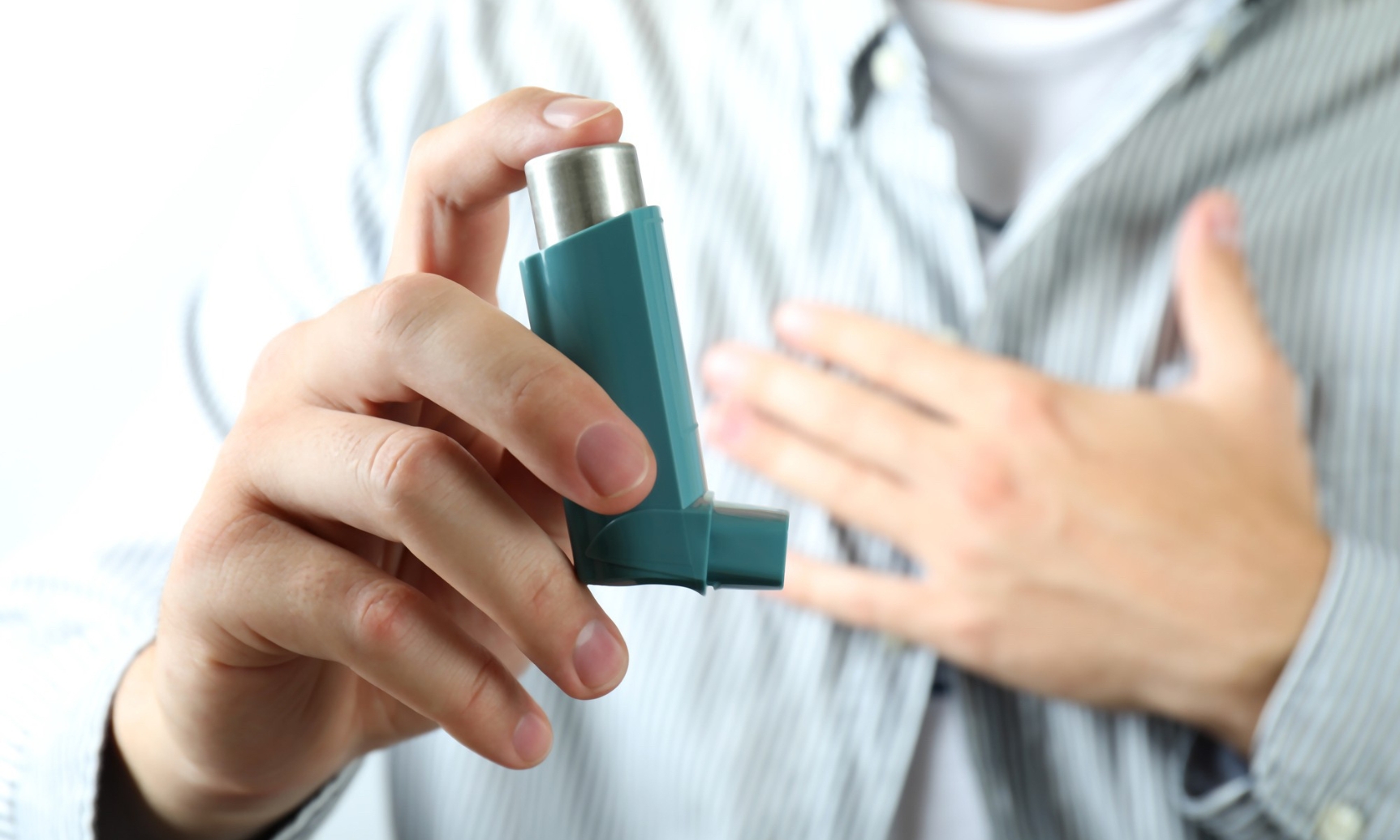
It can happen suddenly, or slowly over minutes, hours, even days. Either way, an asthma attack or flare-up can leave you panicking, as you desperately gasp for air.
Imagine a heavy weight pressing down on your chest or trying to breathe through a straw. That plus asthma’s other classic symptoms—a persistent cough, high-pitched whistling sound when you exhale, the inability to talk, and in more severe cases, your lips and fingernails turning blue—explain why asthmatics tend to assume the worst.
What triggers an attack?
A chronic and serious condition wherein the lungs’ airways become swollen, inflamed, and blocked with mucous, thus hindering one’s breathing, asthma affected more than five (5) million Filipinos in 2019.
A wide range of triggers—cigarette smoke, pollution, dust, hot or cold weather, exercise, gastroesophageal reflux disease (GERD), and even stress—can set off an asthma attack, says Dr. Annie May D. Gustilo, a Pulmonologist at Makati Medical Center (MakatiMed).
“The lining of our lungs is very sensitive to triggers,” she explains. “These triggers irritate and inflame the lining of the lungs. When this happens, the airway shrinks, and that is when asthmatics experience shortness of breath, cough, difficulty breathing, a heaviness in the chest, and wheezing.”
Certain risk factors can also increase the likelihood of developing asthma. The condition is hereditary, so if a member of your family has asthma, chances are, you can have it too. A preexisting allergy like eczema or rhinitis can lead to asthma as well, as can low birth weight, obesity, and gender. “After puberty, because of the sex hormones, women tend to get asthma more than men,” says the MakatiMed doctor.
Even something as natural as the circadian rhythm can spark a flare-up. Notice how asthma tends to attack late at night till early in the morning? That’s because our production of the hormone epinephrine is lowest at these hours. Epinephrine relaxes the lungs’ airways and decreases the secretion of
histamine, a chemical in our body that causes allergic reactions. With reduced levels of epinephrine, the presence of histamine can lead to bronchospasms (or the narrowing of the airways) and the production of mucous.
Can an asthma attack resolve itself? Mild attacks perhaps, but for more severe attacks or when symptoms don’t go away, seek medical attention immediately. Infection, respiratory failure, and cardiac arrest are some of the life-threatening complications of uncontrolled asthma.
Scary—and manageable
As scary and potentially fatal as it is, asthma is not only manageable; it is possible to live a normal and active lifestyle with it.
Consider these celebrity athletes—all asthmatics—who are champions in their respective sports. David Beckham, one of the greatest soccer players in the sport’s history, has had good days and bad days as an asthmatic. Once the fastest female marathoner and a three-time champ of the London and New York marathons, Paula Radcliffe has learned to live with exercise-induced asthma, which was diagnosed when she was a teenager.
In the Philippines, 2014 Winter Olympics figure skater Michael Martinez used to have his asthma medicine on hand as the cold from ice rinks triggered an attack. As he continued to skate, however, his health gradually improved.
Living with asthma
How is it possible to manage asthma when you never know when the next attack’s coming?
First, see a specialist to get a proper diagnosis. Dr. Gustilo usually requests for a pulmonary function test, available in MakatiMed. “It’s a breathing test wherein we request a patient to breathe in and out of an apparatus,” she explains. “A computer will analyze how much air you breathe out. If the result is low, we consider an airway obstruction.”
A patient is then made to use a bronchodilator, a drug that helps open up the airways in the lungs. After 15 minutes, the patient is retested. “If there is an improvement, we can conclude that the patient does have asthma.”
Inhalers—handheld devices containing bronchodilators that you take by breathing them in through your mouth—are an asthmatic’s lifesaver, as they work quickly, providing instant relief. “But if they still don’t have relief from the symptoms, I recommend going to the nearest ER,” says Dr. Gustilo. “They may need to be given oral corticosteroids.”
If an attack occurs out of the blue, the MakatiMed Pulmonologist suggests sitting upright “because it opens the airways,” and try to stay calm while you do deep breathing. See any triggers around you that could cause your flare-up, like a dog or cat, dust, or smoke, perhaps? “Stay away from them as you call for help,” she says.
Lastly, think of asthma management as a stoplight. “The green light means you don’t have any symptoms and you can do your activities,” says Dr. Gustilo. “The yellow light means you may have been exposed to a trigger, and that is why you are experiencing some symptoms like cough. That is when you use your reliever therapy or inhaler. When it’s hard for you to breathe and despite using your reliever therapy, you still have symptoms, that is a red light. Go immediately to the nearest hospital and see a doctor.”
Article based on ”Understanding and Managing Asthma” guesting of Dr. Annie May D. Gustilo last May 14, 2023.
For the complete list of Makati Medical Center’s Pulmonologists, click here. You may also reach us via MakatiMed On-Call at (+632) 8888 8999 or [email protected].
Follow our social media pages for more health-related content and for the latest updates: https://www.makatimed.net.ph/social-media-pages/